
How Your Immune System Changes After 40 & What Actually Supports It


A cold that used to last three days now takes a week. The cut on your hand is still healing after ten days. You get the same flu everyone in the office got, but somehow you feel it for longer.
None of this means your immune system is failing. It means it is doing something more interesting than simply getting weaker; it is changing shape.
Understanding what actually shifts, and when, makes it far clearer which of the many things you could do are worth doing.
Two Systems, Not One
Your immune defences operate on two levels, and they age differently.
The first is innate immunity, the rapid, general-purpose response. Skin and mucous membranes are physical barriers. Cells that engulf anything that looks foreign. Inflammation as an emergency signal. It responds within minutes; it does not need to recognise the specific threat, and it works the same way on a splinter as on a virus.
The second is adaptive immunity, the slower, more precise system. It identifies a specific pathogen, builds a targeted response, and then remembers it. This is why you get chickenpox once. It is also what vaccines train.
With age, the innate system tends to become noisier and less well regulated. The adaptive system tends to become narrower. Those two changes have different causes and different consequences.
What Changes About Your Immune System After 40
Researchers use the term immunosenescence for the gradual remodelling of immune function over a lifetime. Several specific things are happening underneath that word.
The thymus quietly retires
Behind your breastbone sits a small gland called the thymus. Its job is training T cells, the immune cells responsible for recognising and responding to specific threats.
The thymus is at its largest and most active in childhood. From adolescence onward it steadily shrinks, and its functional tissue is gradually replaced by fat. By middle age, comparatively little of it is still working.
This is entirely normal. But it means the supply of newly trained T cells declines over time, and the body increasingly relies on the ones it already has.
Experience replaces flexibility
T cells come in two broad categories. Naive T cells have not yet encountered a threat and can be assigned to anything new. Memory T cells are specialists, already trained against something specific.
A young immune system holds a large reserve of naive cells, enormous flexibility, and less accumulated knowledge. An older immune system holds a large library of memory cells and fewer naive ones. It is highly experienced but less adaptable.
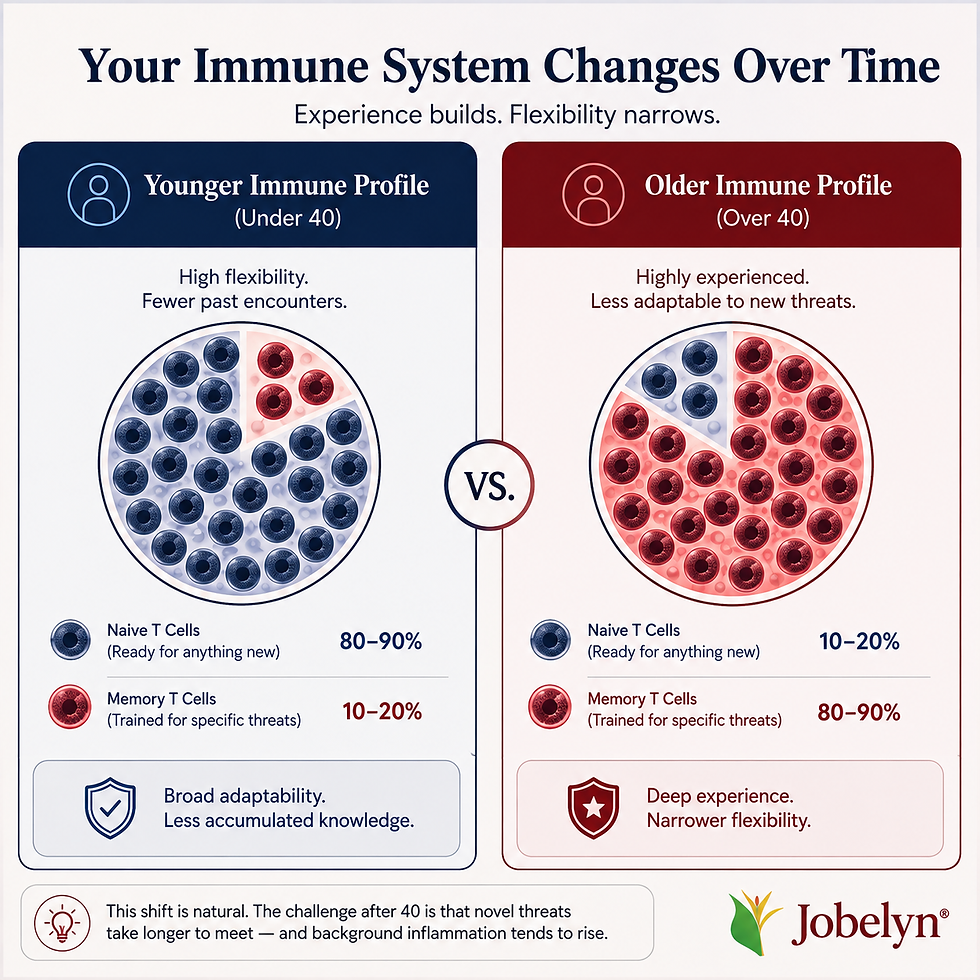
This is precisely why a genuinely novel pathogen tends to hit older adults harder. It is not that the immune system is weak. It is that this particular threat is not in the library, and building a new entry takes longer than it once did.
The background noise rises
At the same time, low-grade inflammatory signalling tends to increase, a process often described as inflammaging.
This creates an awkward combination. Chronic background inflammation is elevated, while the ability to mount a precise, targeted response is reduced. More noise, less signal. The two changes are related, and each makes the other somewhat worse.
Why Oxidative Stress Sits Underneath All of This
Immune cells are unusually vulnerable to oxidative damage, for an almost paradoxical reason.
Some immune cells deliberately produce free radicals as a weapon, a controlled oxidative burst used to destroy pathogens they have engulfed. It is an effective tactic, but it means these cells operate surrounded by exactly the molecules that damage cellular structures.
Immune cells also divide rapidly when responding to a threat, and rapid division is energy-intensive, which generates further free radicals as a byproduct.
When the body's antioxidant capacity keeps pace, this is manageable. When it does not, immune cells accumulate damage, and damaged immune cells respond less precisely and contribute more to the background inflammation described above.
What Actually Supports Your Immune System After 40
The commercial wellness market suggests immune health is largely a matter of buying the right thing. The evidence points somewhere less convenient and considerably more effective.
Sleep, before anything else
Much of the immune system's coordination work happens during sleep. Memory cell formation, immune signalling regulation and tissue repair all depend on it.
Short sleep is consistently associated with reduced immune responsiveness in research settings. If you are choosing one thing to change, this is it, and it is free.
Moderate, regular movement
Regular moderate activity is associated with better immune function and lower chronic inflammatory markers. Walking is sufficient. Consistency matters more than intensity.
Worth noting the shape of this relationship. Moderate activity helps. Prolonged, very intense exertion without adequate recovery does not, and can temporarily suppress immune function. More is not automatically better.
Adequate protein
Antibodies and immune cells are built from protein, and protein intake frequently declines with age as appetite changes. Insufficient protein directly limits the raw material available for building an immune response.
Managing chronic stress
Sustained psychological stress keeps cortisol elevated, and cortisol suppresses aspects of immune function. Short-term stress is unproblematic. Stress measured in months is a genuine input.
Vaccination
Worth stating plainly, because supplement marketing rarely does. Vaccines remain the single most effective tool available for protecting older adults against specific infectious threats. Nothing in this article substitutes for that conversation with your doctor.
Antioxidant capacity from diet
Given how exposed immune cells are to oxidative damage, dietary antioxidant intake is a reasonable place to pay attention, principally polyphenols, the compounds plants produce to protect their own tissue and which give them their deep natural colours.
Where Jobelyn® Fits
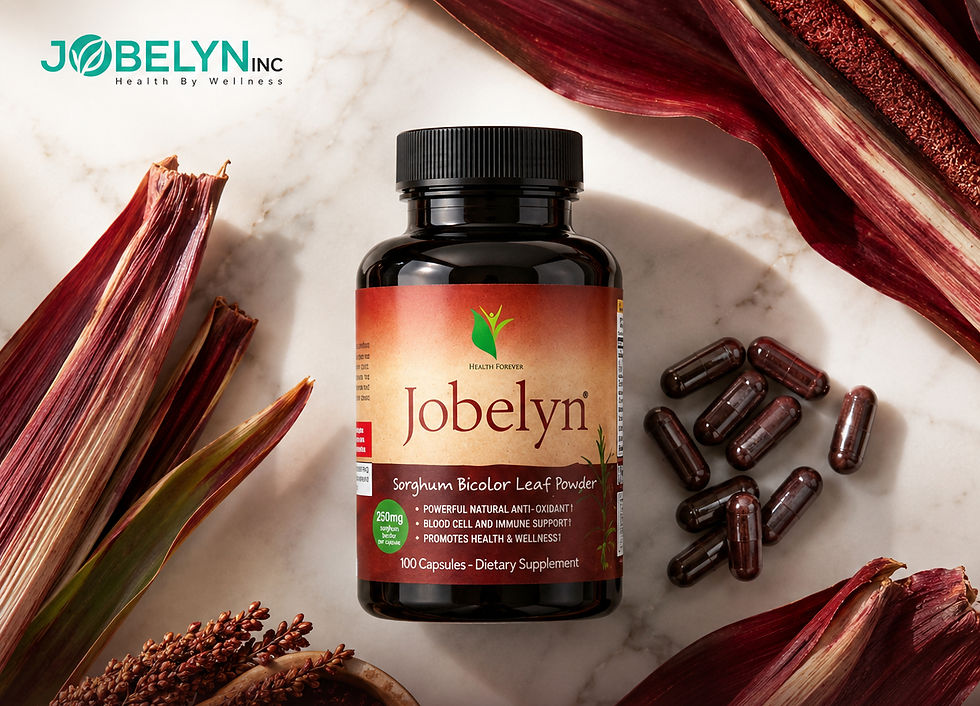
Jobelyn® is made from the crimson leaf sheath of West African Sorghum bicolor, which produces unusually concentrated polyphenols including a rare class of compounds called 3-deoxyanthocyanidins, or 3-DXA.
Two capsules daily support cellular protection against oxidative stress, support immune resilience, help maintain healthy inflammatory balance, and support overall vitality.†
Where it sits in the list above matters. It supports one input among several. The sleep and the protein and the vaccination conversation are not optional extras that a supplement replaces — they are the foundation, and anything else is built on top of them.
When to Speak to a Doctor
Everything described here is ordinary age-related change. It is not the explanation for every immune difficulty.
Infections that recur unusually often, take much longer than expected to resolve, or are unusually severe are worth proper investigation. So are wounds that heal very slowly. These can indicate conditions that are identifiable and treatable, and none of them are addressed by lifestyle adjustment alone.
The Useful Reframe
An immune system at fifty is not a broken version of one at twenty. It is a different instrument, one carrying decades of accumulated recognition, trading some flexibility for a great deal of experience.
What it needs is not boosting. It needs the conditions under which it works well: enough sleep, enough movement, enough protein, less chronic stress, and adequate protection against the oxidative damage its own work generates.
Those are unglamorous. They are also the ones the evidence actually supports.

Support the conditions your immune system works best under. Jobelyn® delivers 3-DXA™ from organically grown West African Sorghum bicolor, with an ORAC antioxidant rating three times higher than acai berry. One bottle contains 100 capsules, a fifty-day supply, for $39.95 with free shipping across the United States. → Shop Jobelyn®
Certified Organic · Non-GMO · Gluten-Free · 25 Years of Trusted Wellness
These statements have not been evaluated by the Food and Drug Administration. This product is not intended to diagnose, treat, cure, or prevent any disease. Individual results may vary. Consult your healthcare provider before beginning any new supplement, particularly if you are pregnant, nursing, or taking prescription medication.


Comments